

Ulfhednar
The Beast Beneath the Name

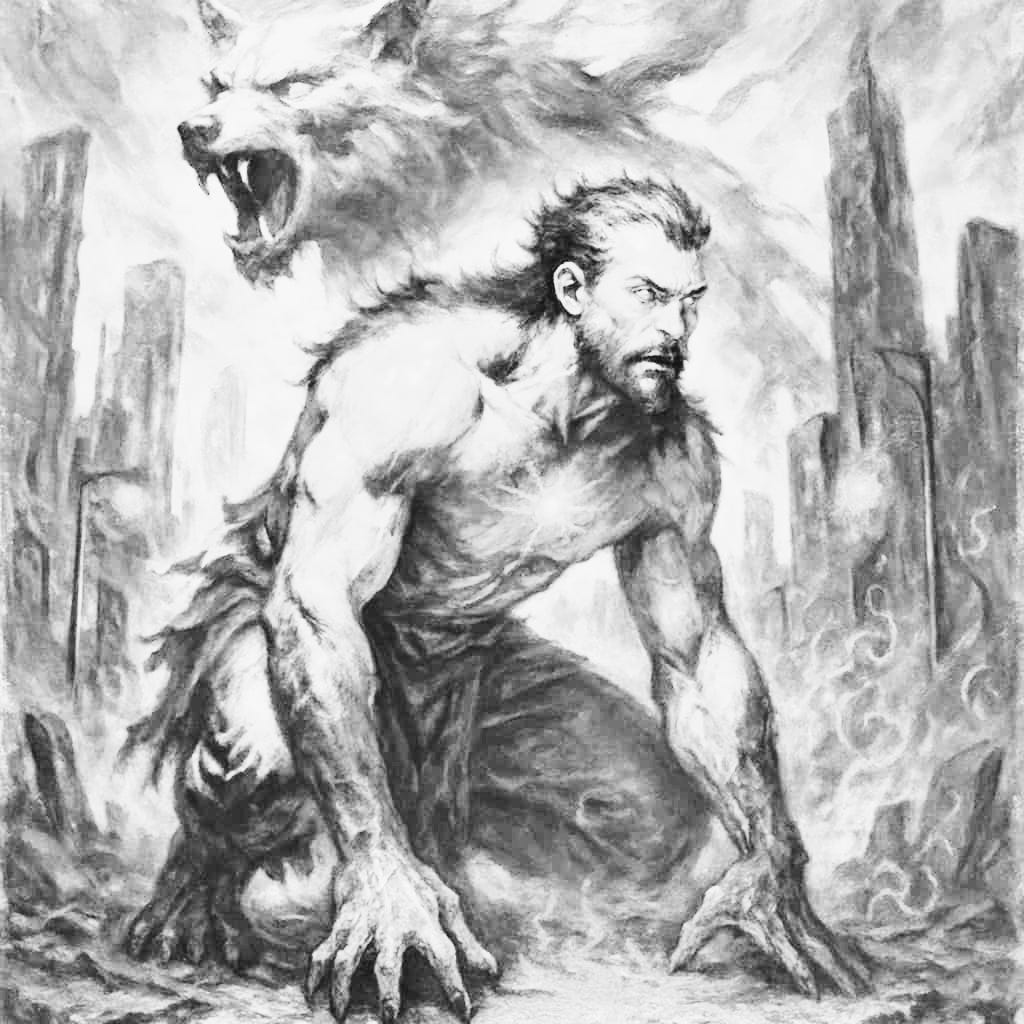
Ulfhednar
He walks in daylight, clothed in names,
well-fed on small routines.
A house, a table, a path worn smooth.
Under the skin, the wolf remembers.
The pact was never broken.
Just… buried.
Filed beneath taxes, streetlights, glass.
He lets them call him man,
but he sleeps with teeth.
They told him the wild was gone.
That cities had killed the forest.
However, he knows truth:
the forest put on a shirt.
The trees became buildings.
The river learned to crawl through pipes.
The wolf wears skin
like a mask made of silence.
He walks the rim of the world;
he listens, ears twitching beneath memory.
He smells the lie in stone.
He tastes the myth in gasoline.
He growls at church bells,
and smiles.
The cut will come.
It always does.
The moon doesn’t need to rise.
The transformation is a blessing.
It is ritual.
Return.
He will remove his name like clothing.
He will speak with breath instead of words.
And the world,
this veiled, panting skin stretched over hunger,
will open to him again.
It will not scream.
It will not resist.
It will welcome him back.
The wolf remembers
what the man tries to forget:
that the world is not dead,
only leashed.
That all this order is stitched with hair and bone,
and the seams ache.
The cut is violence, yes;
It is mercy,
the blade that frees the beast beneath the myth,
the mouth behind the prayer,
the body beneath the street.
He is more than predator.
He is priest.
The howl is hymn.
Invocation.
It is the kiss that parts the veil.
XXX
Ulfhednar: A Ritual Commentary on the Beast Beneath the Name
The wolf here is an ancient symbol of savagery. He is the priest of return, the one who remembers what the body forgot when it learned to wear clothes and pay bills. Ulfhednar is a hymn to that memory, a poem of shedding and re-membering, where the act of becoming wild again is not regression but ritual resurrection. I borrow the cadence of modern myth, while whispering growls between its teeth.
The structure carries its own irony: it moves with the symmetry of free verse that wants to sound civilized, almost domestic, only to rupture through it. Each stanza presses up against the edge of control, then bleeds into invocation. The measured diction, “a house, a table, a path worn smooth,” is ritual containment. Beneath, the wolf breathes. The poem’s rhythm mirrors the transformation it describes: language as fur, syntax as sinew, pulse emerging beneath precision.
The ulfhednar, the wolf-warriors, were shamanistic holy men, blessed by blood and fang. Vessels of sacred contagion, where human and animal, myth and muscle dissolve into one another. Civilization’s leash frays at his touch. The wolf remembers that the wild was never erased, only reconfigured: “The forest put on a shirt.” This inversion is the poem’s revelation. Modernity is the mutation of the forest. Concrete is bark; asphalt, riverbed; engines, thunder given shape.
The cut the poem foretells, the one that “always comes,” is a sacrament. It is the necessary violence of unveiling, the knife that frees the world from its skin of denial. The cut is initiation. It is the breaking that lets the older current rise again through blood and asphalt alike. When the wolf sheds his name, he rises into truth.
The final transformation, “The howl is hymn,” is an act of devotion. The howl is a prayer uttered in the native tongue of hunger. It is both wound and worship, both tearing and return. The poem becomes its own rite of rewilding, a reminder that the sacred and the savage are twins who have worn each other’s faces too long. The wolf remembers, and through that remembrance, we begin to wake.
[I am not going to charge people to read what I write. I appreciate everyone for being here, for reading and sharing and interacting. If you would like to support this publication, your subscriptions and donations make wonderful motivation. Likes, comments, shares, and heart reacts are also fantastic offerings to the Mighty Algorithm; every little click helps.]
Sounds like you could be describing me?
Loved this