
Bindrunes
Signs and Sigils of the Northern Mysteries

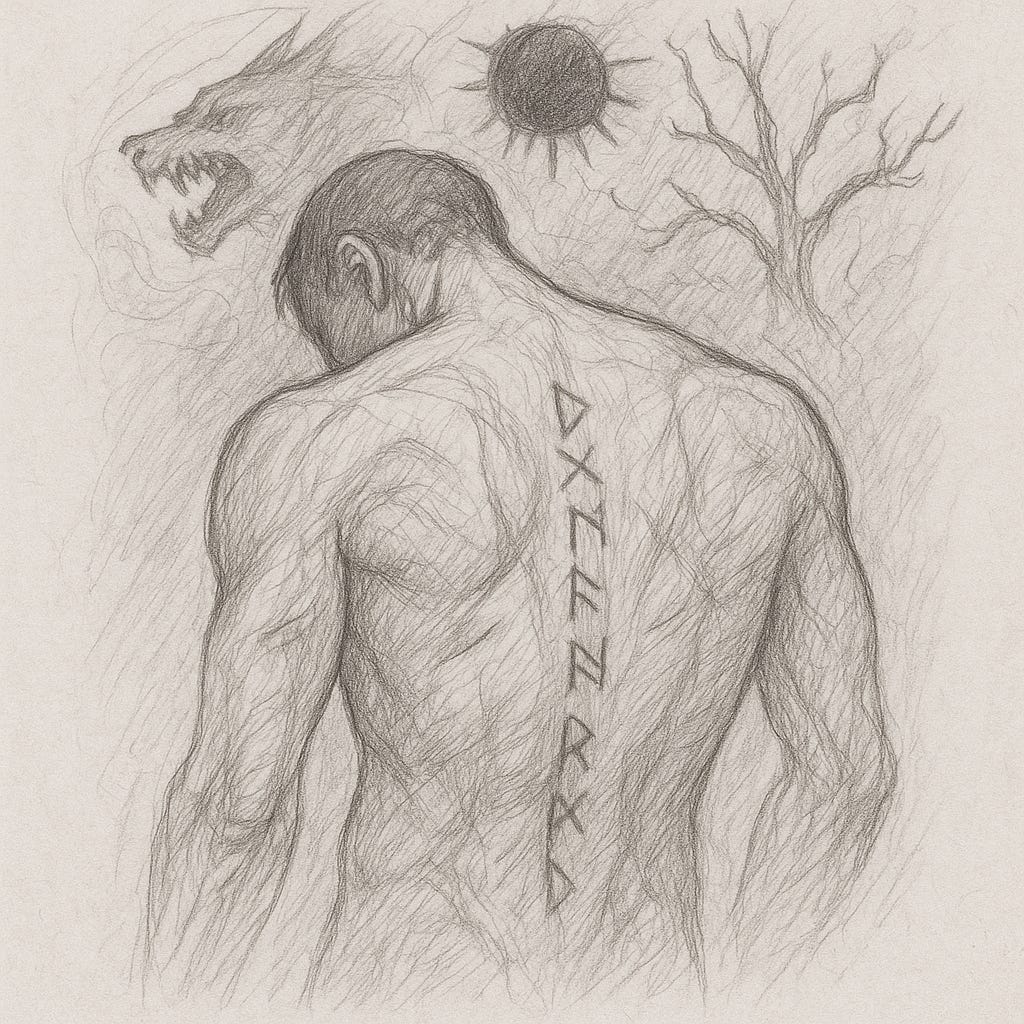
At midnight in my study, I hold a small wooden talisman near the candle’s flame. Two rune-staves carved on its surface intertwine seamlessly, merging into a single enigmatic symbol. As a rune magician, I feel the ancient currents stirring in that bindrune, as if the air itself remembers its old power. Bindrunes, aesthetic combinations of multiple runes, are far more than artistic shorthand; they are gateways to a hidden heritage of Northern magic and potent occult catalysts whispering of an ancient mystery tradition.
In simplest terms, a bindrune is a fusion of two or more runic characters into one composite. Imagine taking the runes for Berkano and Hagalaz (from the Younger Futhark tradition) and superimposing them: the result is a bindrune: the famous Bluetooth logo that encodes the initials of a Viking king (Harald Bluetooth) in one neat symbol. Historically, Norse scribes sometimes merged runes for practical reasons. Space was at a premium on a rune stone or amulet, so letters would be combined in a monogram to save room. Viking Age inscriptions occasionally feature names or words compressed into such bindrune monograms, merging several characters into a single glyph.
Even in these pragmatic creations, one senses an extra layer. Each rune in the bindrune still holds its independent meaning and magick. When joined, those meanings entwine. Modern runic scholar Edred Thorsson notes that combining runes in this way creates “a visual talismanic image that acts as a focus for magical intention.” In other words, a bindrune isn’t just letters smashed together; it’s a sigil, a charged symbol greater than the sum of its parts. Think of runes as ingredients, each with its own flavor and effect, and the bindrune as a stew that blends them into something new and potent.
Skeptics often point out that many bindrunes in Viking-era artifacts look mundane. Indeed, among inscriptions from the Viking Age, examples of bindrunes are scarce, and most of those discovered seem to bear no particular significance beyond stylistic flourish. Many were likely just the carver’s way of fixing a mistake or fitting a name onto a sword hilt. Runologists observe that when Vikings combined runes on monuments or jewelry, it was often done for simple efficiency, to save carving time or space rather than to encode some arcane formula.
However, scratch the surface of what little evidence we have, and magick glints underneath. The very word rún in Old Norse means “secret” or “whisper,” a hint that these letters always carried an air of mystery. In the Icelandic language, rún came to mean a “magical sign,” and in Faroese it simply means “magic.” Our ancestors clearly believed runes could do something more than convey mundane messages. Echoes of a runic occult tradition survive in old texts: the Poetic Edda’s Sigrdrífumál lists various kinds of “power-runes” such as victory-runes, wave-runes, and ale-runes, each a charm for a specific need. One verse describes how ale-runes should be cut on a drinking horn and on the backs of one’s hands, with the rune Nauðiz marked on fingernails, to ward against poison.
In Egill’s Saga, the skald Egill Skallagrímsson does just that: he carves runes on a horn to neutralize poison, reddening them with his blood, and the horn explodes from the force of the spell. These accounts suggest runic knowledge was specialized, perhaps even secret knowledge transmitted in a mystery school of the North.
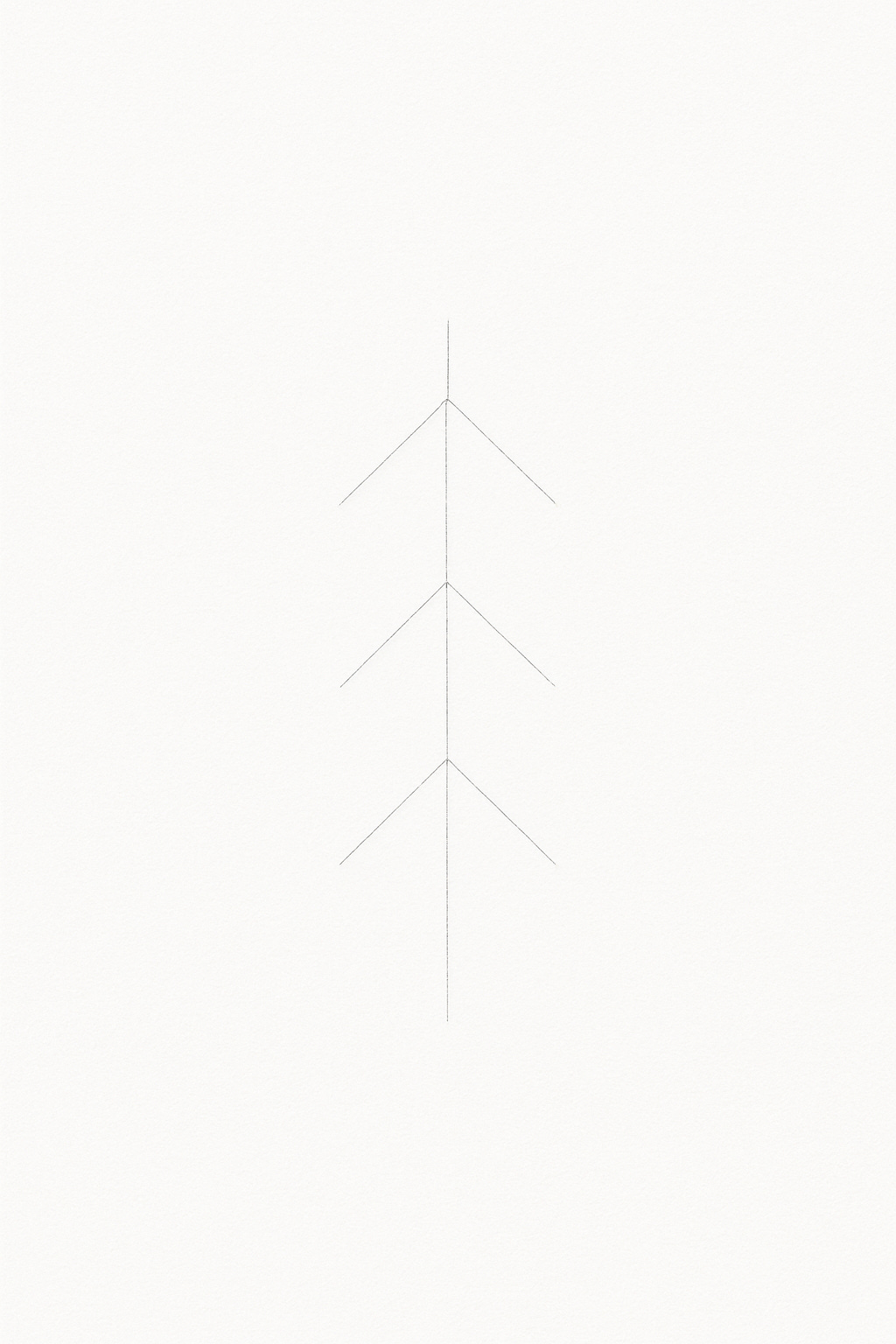
Consider the famous amulet from Lindholm, Sweden: its runic inscription declares “ek erilaz sa wilagaz haite, ... alu”. In translation, the carver states, “I am Erilaz, called the crafty,” followed by a line of repeated runes and the word alu, which is an arcane term of inspiration. Erilaz is thought to be a title for a rune-magician or priest. Here we have a person claiming an occult title, invoking Odin’s wisdom, and employing a mysterious formula. In this artifact, we see an encoded spell: layered runes (some even written on top of each other in a stacked bindrune resembling a tree) and a cryptic incantation. The text repeats certain runes in succession, an apparent magical formula. Since the Ansuz rune is repeated nine times, many have speculated on the possible numerical significance as well, adding layers of correspondence to the inscription such seen in many Western ceremonial rituals. In one section, multiple Tiwaz runes are literally stacked as a single character, forming an evergreen-like shape thought to magnify Tyr’s protective power.
So while a Viking-era bindrune might often be just an artsy monogram, there are outliers that look more like spellwork than shorthand. As one historian of Norse magic cautions, we must discern fantasy from fact in these matters, but even if later romantics have exaggerated the role of bindrunes, the genuine hints of esoteric practice are there. The North had its secrets, guarded by those who knew how to carve runes atop runes.
In the 20th century, as ancient rune stones whispered their secrets from museum cases, a few brave souls listened. Enter Edred Thorsson (the pen name of Dr. Stephen Flowers), a runologist and occultist who helped to reignite the runes as a living magical system. Thorsson studied the historical lore but also drew on the work of earlier occultists (many from early 1900s Germany and Austria, which often causes ideological problems as people throw the babies out with the bathwater, but I digress) who treated runes like cosmic batteries to be charged with intent. By the 1980s, he had synthesized these threads into a modern practice, founding the Rune-Gild and writing books that became foundational for aspiring vitki (rune magicians). The influence of Thorsson’s work is pervasive; the chances are that if you pick up any book on rune magic today, his ideas are present.
Thorsson’s view on bindrunes sharply departs from the purely pragmatic. For him, bindrunes are powerful sigils: deliberate combinations to concentrate runic energies toward a purpose. He compares the process to Austin Spare’s sigil magic and to the use of mantras, techniques where you distill an intention into a symbol or sound. In Rune Might, Thorsson writes that bindrunes work on “the same principle as sigil magic,” forming “a visual talismanic image that acts as a focus for magical intention.” If a modern witch might write a desire and craft a monogram sigil from it, the rune magician selects specific runes and artfully merges them. The resulting bindrune is charged with layered meaning: each rune’s symbolism reinforces the others. Thorsson even points to an ancient amulet inscribed with a gibberish word (luwatuwa) as evidence that early runemasters sometimes crafted “nonsense” formulas for magical effect, possibly a Germanic equivilent of ‘Abracadabra.’ In his view, our ancestors understood the power of obscuring a magical message; by turning a phrase or name into a bindrune, they took it one step out of the ordinary world and into the realm of secret symbols.
Not everyone agrees with Thorsson’s esoteric take, and that has sparked vigorous debate in both scholarly and pagan circles. Walk into any gathering of historians or traditionalist Heathens and proclaim that bindrunes are ancient occult catalysts, and you’ll get some raised eyebrows. The pragmatic camp cautions that much of what passes as rune magic today stems from modern invention rather than historic reality. In their view, a bindrune on a Viking’s sword was likely just the carver’s initials or a decorative flourish, not a spell.
This camp also points out that genuine magical inscriptions in the archaeological record are exceedingly rare, and that the elaborate Icelandic galdrastafir (runic staves) come from post-medieval grimoires rather than the Viking Age. In short, they say: go ahead and make your bindrune talismans today if it inspires you, but don’t imagine every intertwined rune in a museum was intended as a spell.
On the other side, occultists and esoteric Heathens, among whom I count myself, acknowledge the historical gaps but emphasize a continuity of spirit. Yes, much of our formal rune magic system is reconstructed or adapted, but even the pragmatic view concedes that the Norse thought of runes as imbued with hidden power. If runes were never used magically, why do the old poems speak of Odin winning them through sacrifice, and why does folklore preserve them as charms? Those in the esoteric camp argue that even if ancient bindrunes were mostly utilitarian, the concept of empowering writing with magic was understood by the rune-carvers. We modern practitioners are simply taking that concept and fleshing out a magical system that could have been, one only hinted at in lore.
There is also the perspective that efficacy makes a practice “real enough.” As one contemporary rune worker observed, it’s not historical pedigree that makes a practice useful, but our ability to connect with and believe in the stories surrounding it. As one modern guide notes, bindrunes are “real” both historically and spiritually “if you put meaning and purpose into them, they function in the same way that other types of spiritual symbolism do,” essentially as practical magic. In other words, a bindrune’s power is activated by the intent we invest in it. By this view, it matters less whether a Viking blacksmith thought to combine runes for a spell, and more that we can do so now with great effect. The tradition is a living one; its truth is measured in results and resonance.
As a journalist who has spoken with both academics and modern sorcerers, I find that the divide often comes down to what one considers the rightful heir of the past. The historians seek a cautious fidelity to evidence. They reconstruct the ship with only the timbers that have washed ashore. The occultists sail that ship out into open waters, patching the hull with imagination where needed, guided by intuition. In my experience, there’s value in both approaches. The scholarly skepticism keeps us honest, reminding us to check our facts and not claim “ancient origins” for something invented in 1988. But the visionary approach keeps the runes vital; it allows this old lore to live and grow rather than sit preserved in a museum case. The push and pull between these views ensures that our understanding of bindrunes is both grounded and dynamic.
Step back from the debates and consider the bindrune itself, this striking fusion of shape and meaning. There is a reason modern magicians find it so powerful. A bindrune is concentration. It is intention distilled into one sigil, each stroke carrying layers of significance. When I carve a bindrune for protection, combining Elhaz with Tiwaz for example, I am essentially mixing herbs in a cauldron; each component potent on its own, but together creating a new potion entirely. The Elhaz brings its warding energy, Tiwaz its courageous strength; carved as one, they reinforce and complete each other.
Practitioners often report that such symbols “come alive” in a way a single rune might not. It’s as if the meeting of runes sparks a dialogue. Meditating on a well-crafted bindrune can be a journey: your eye follows the lines and suddenly a new shape or letter emerges that you hadn’t noticed before. These serendipitous discoveries are not accidental. They’re the very reason bindrunes are occult catalysts. They speak to the part of us that understands symbols better than words. Compressing an intention into a compact form creates a psychic pressure behind it, the symbol becomes a battery of will.
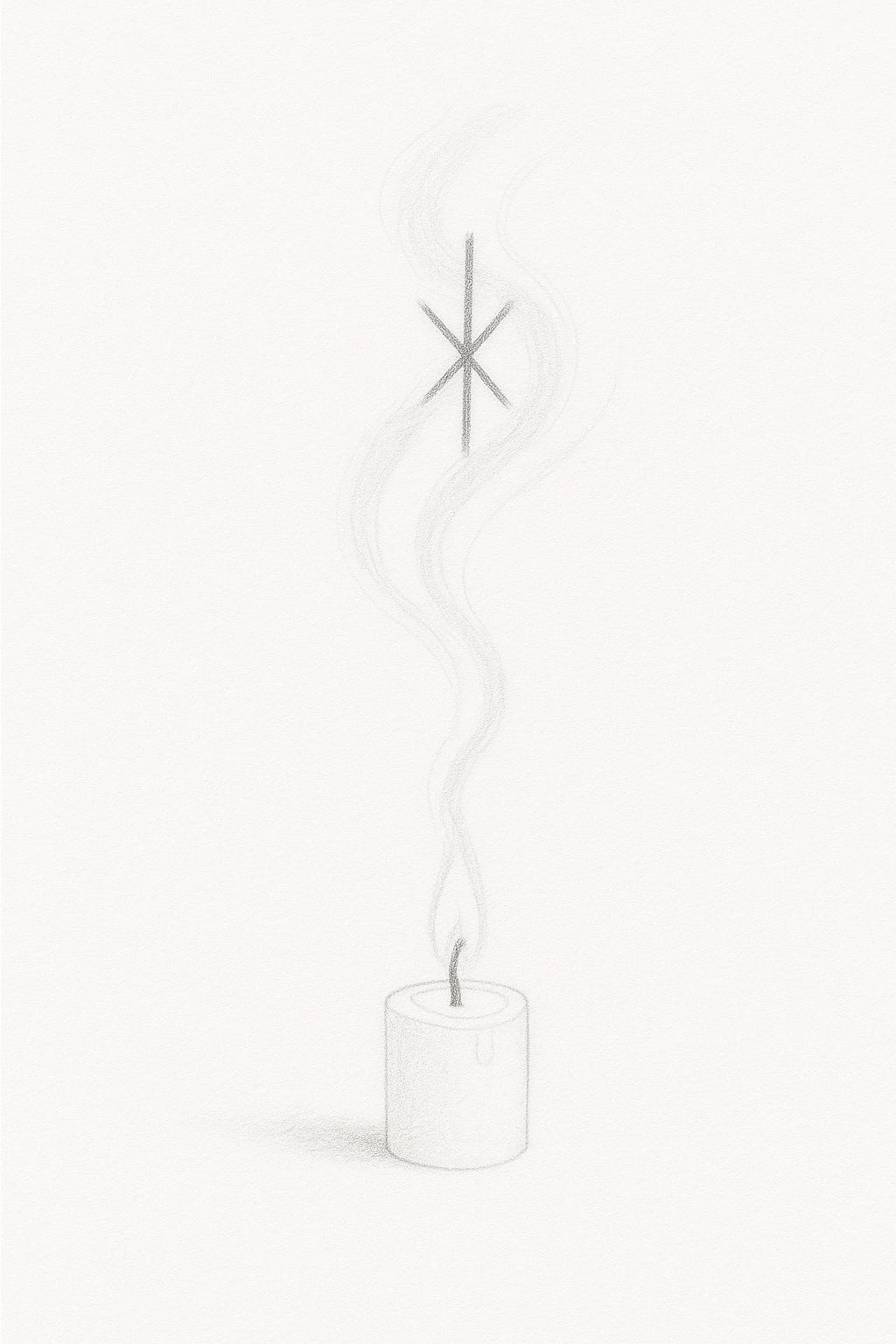
Historically, we see hints of this catalytic power in medieval Icelandic charms. The famed Ægishjálmur (“Helm of Awe”) was drawn as a complex, snowflake-like symbol meant to instill fear and protection. Its form unites several elements into one potent emblem. A bindrune crafted today serves a similar purpose; whether it’s etched on a pendant, drawn in a journal, or tattooed on skin, it functions as a focal point for one’s will and a beacon to whatever powers one might invoke. The very act of creating it is an act of magick: choosing the runes with care, arranging them just so, perhaps chanting their names as you inscribe them. In that sense, bindrunes truly are practical magic, a union of the spiritual and the material.
I can speak to their effectiveness. Years ago, I devised a bindrune for a friend plagued by nightmares. It combined Raidho (road) and Dagaz (dawn) to signify “journey from darkness to daylight.” I burned this bindrune into a small disk of wood and gave it to him to place under his pillow. Soon after, his nightmares ceased, replaced by vivid, empowering dreams. It seemed the bindrune catalyzed a shift in his subconscious, a bridge between his intent and the hidden workings of mind and spirit. Were the effects purely psychological? Maybe; however, there were effects, and the very ones that were intended.
My own path as a rune magician has led me down some unconventional trails. While I keep my practice firmly rooted in the Northern tradition, I also wander into the shadowy groves of the poison path, working with the spirits of baneful plants and venom in magic. Blending rune magic with plant-based witchery is something we find in the sagas, and a natural extension of the role of the vitki or volva (I cover this particular relationship in greater detail in my article, Poisoned Paths of the Old Gods, available free here on substack). I believe that we should practice as our ancestors would have, had they known what we know today and had the influences we have. In other words, tradition isn’t a fossil, it’s a seed. Our forebears were imaginative, and if they had possessed knowledge of exotic herbs or far-flung mysticism, they might well have woven those into their practice. We have more options than they did, and honoring the runic path means using our broadened horizons to enrich the art, not confine it.
This philosophy has led to profound experiences. I have traced bindrunes with flying ointment on my skin under moonlight. I have carved Isa into a poisonous plant’s stem to “freeze” an illness, and inscribed Eihwaz into a salve of hemlock as a ward, harnessing the plant’s toxicity as a shield. These explorations are not found in lore, but they have yielded results. In one case, I combined Isa and Laguz into a symbol aiming to halt a “poisonous” relationship in a friend’s life. I carved it on wood and employed it in a ritual alongside a trance-inducing herb. The toxic bond did go dormant soon after. Coincidence or not, the outcome aligned with our intent, and the bindrune was the focal catalyst of that work.
For example, one practitioner may carve a bindrune on oak and anoint it with mead, while I might whisper galdr to a sprig of hemlock wrapped around a stave. Both approaches share reverence for the runes’ core mystery. Our ancestors did not have these tools, but if they were truly seekers of wisdom they would applaud our willingness to push boundaries.
In the end, bindrunes encapsulate what is magical about the Northern path. They are art and code, prayer and spell, all in one. What at first seems very simple and straightforward is discovered, upon closer examination, to have infinite strata of depth and meaning. Whether you approach them as historical curiosities or as living talismans, their allure is undeniable. There’s a reason someone who knows nothing of runes might still be drawn to a bindrune’s design; it resonates on that archetypal level where symbol and story meet.
As a journalist-mage, I set out to find the truth about bindrunes, and I found that truth has many layers. There is the factual layer: yes, bindrunes existed in antiquity, mostly as practical monograms or decorative flourishes carved to save space. There is the mythic layer: poems and sagas whisper of runes used in charms and spells, implying an undercurrent of secret knowledge passed down through the lore. Then there is the living layer: modern inheritors like Thorsson, and indeed anyone today who crafts a bindrune with intent, who treat these symbols as part of an ancient and evolving mystery tradition. The Northern world may not have left behind formal “mystery schools” in the classical sense, but in the rune-carvers and skalds, in the wise-women who scratched a few staves for luck, we see the outline of a mystical education. Knowledge was shared not in classrooms but in quiet, hearth-lit whispers. Bindrunes were one way the old rune masters taught and preserved their art, a secret sign only understood by those initiated into the runes’ deeper meanings.
By practicing bindrunes as occult catalysts today, we become part of that story. We take our place in the long chain of those who have sought the hidden wisdom of the North. When I carve a bindrune now, I feel I’m in conversation with those long-dead artisans. In the soft scratch of my knife, I hear echoes; the scrape of a chisel on stone, the murmur of a sorcerer sketching a hidden sign in the margins of a manuscript. I sense Odin brooding at my shoulder, humming an old galdor tune as my bindrune takes shape. The symbol I create might be new, something my ancestors never saw, and yet it is lit by an old fire.
Bindrunes bridge time, allowing the ancient and the modern to speak. They remind us that the Northern tradition is not a relic, but a living path, one that grows as we grow. Each bindrune we craft today is like a new verse added to a very old saga. And as with any saga, it is the interplay of continuity and creativity that keeps it alive.
[My words are offered as gifts. Please consider supporting The Shadow Press as a free or paid subscriber.]
I also offer handmade incense, candles, and teas, crafted by me personally, so be sure to check that out as well on my Buy Me A Coffee page.
Germanic mythology is my religion. I prefer the term "Lore" to mythology, but that's a personal view. Just because it didn't happen, doesn't mean it isn't true. The mysteries are encoded within the poetry, layer upon layer.
Excellent article.
I’ve always loved Norse.
Runes are far more than rudimentary letters. Odin took those runes, and gave them to humans, to the chagrin of all the other Aesir and Vanir. He didn’t say they were for language. He said they were for magic.
But, language is the first magic. And written language is time travel(not joking on that. It’s true).
Odin is the ultimate god, because despite shallow comparisons to other “Father” gods, he’s very unique.
No one else sacrificed themselves hung from Yggdrasil for 9 days and nights. No one else befriended a runt of a frost giant, made him a high ranking soldier, and later made him the only Jotun to be able to travel to Asgard with complete freedom.
There’s so much more I can say on this, but i won’t here. I’ve always been into Norse mythology. Hit me up about it sometime, more one/on-one. I’ve also got a throwing axe with Runes I burnt into it. I picked the tree branch, bought the axe head, because I’m no good with fire. lol.